 Ralph Keyes (author of ‘Time Locked’) sums it up well – “Nearly every study on time spent doing chores has reached the same conclusion: Labor-savers relieve drudgery and speed tasks; but, on balance, they don’t save time. We no longer haul water, split wood, trim wicks, clean lamps, boil clothes, feed horses or bake bread. But … “
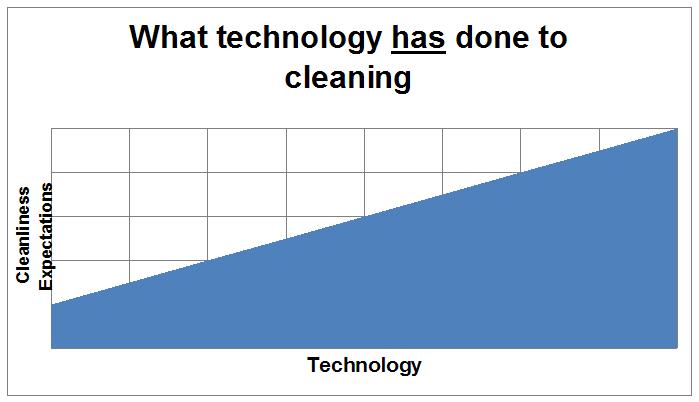
The main reason we still spend so much time on cleaning is changes in society expectations on cleanliness. According to Ruth Schwartz Cowan (in her book “More Work for Mother") while technologies made work easier, “its volume increased: sheets and underwear were changed more frequently, so there was more laundry to be done … houses grew larger, so there were more surfaces to be cleaned”. Further, the TrailEnd website quotes that “…whereas once laundry was done once a week and clothes worn several days before being laundered, modern housekeepers may do laundry every day because family members wear an item only once before washing it”.
Ralph Keyes (author of ‘Time Locked’) sums it up well – “Nearly every study on time spent doing chores has reached the same conclusion: Labor-savers relieve drudgery and speed tasks; but, on balance, they don’t save time. We no longer haul water, split wood, trim wicks, clean lamps, boil clothes, feed horses or bake bread. But … “
The main reason we still spend so much time on cleaning is changes in society expectations on cleanliness. According to Ruth Schwartz Cowan (in her book “More Work for Mother") while technologies made work easier, “its volume increased: sheets and underwear were changed more frequently, so there was more laundry to be done … houses grew larger, so there were more surfaces to be cleaned”. Further, the TrailEnd website quotes that “…whereas once laundry was done once a week and clothes worn several days before being laundered, modern housekeepers may do laundry every day because family members wear an item only once before washing it”.
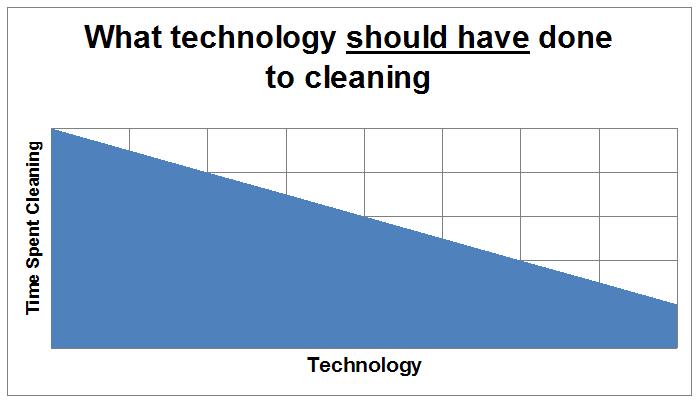 What was considered clean 50 years ago may not be considered clean enough by today’s standards. However, are today’s cleanliness standards reasonable?
For example, research is now indicating that overly clean houses are actually bad for us. Why? Two arguments are – (i) cleaner houses leads to less germs, and reduced exposure to germs leads to weaker immunity. (ii) the numerous cleaning products we use are leading to a buildup of dangerous toxins in our homes.
What was considered clean 50 years ago may not be considered clean enough by today’s standards. However, are today’s cleanliness standards reasonable?
For example, research is now indicating that overly clean houses are actually bad for us. Why? Two arguments are – (i) cleaner houses leads to less germs, and reduced exposure to germs leads to weaker immunity. (ii) the numerous cleaning products we use are leading to a buildup of dangerous toxins in our homes.
 Another question to consider who sets today’s cleanliness standards anyway? Given the potential money in the ‘clean’ business, it should come as no surprise that corporate marketing teams have had an impact on these cleanliness standards. For example, apparently, the ‘Cleanliness Institute’ which promoted the use of soap and water in the schools was sponsored by soap manufactures. (Source: Trail End State Historic Site)
So in all likeliness much of today’s cleaning is a waste of time.
Another question to consider who sets today’s cleanliness standards anyway? Given the potential money in the ‘clean’ business, it should come as no surprise that corporate marketing teams have had an impact on these cleanliness standards. For example, apparently, the ‘Cleanliness Institute’ which promoted the use of soap and water in the schools was sponsored by soap manufactures. (Source: Trail End State Historic Site)
So in all likeliness much of today’s cleaning is a waste of time.
How can we save time cleaning?
1. Manage your cleanliness expectations to reduce workloads
How often do we really need to clean? Does it really matter if you don’t clean the bathroom every week? Why can’t you re-wear the same shirt you wore last night for a couple of hours?2. Organise your home to be ‘cleaning-friendly’
For example – buy things that are easy to clean, have an easy to clean floor, keep the house tidy and things in their place.3. Reduce dirt entering your home
For example – leave shoes at the entrance door, or at least wipe them before entering your home, and tell the dog he lives outside.4. Avoid perfectionism
We all know people who will scrub and scrub until every item appears to be spotless. However, no matter how hard they try ‘it’ will never be 100% clean. When cleaning, it is best to focus on getting an item to a satisfactory cleanliness level. The more time you spend on cleaning, the marginally less impact it makes.5. Use technology to save time, not to increase frequency of cleaning.
Don’t be conned into cleaning more often than you need to.6. Reduce what needs cleaning
The more you have the more that needs cleaning. Remove ‘dust- collecting’ objects, and perhaps consider living in a smaller place with less rooms to clean.7. Adapt time-saving cleaning techniques
Learn cleaning techniques to save time, and ensure you have the right ‘tools’ for the job.. (There is plenty of scope here for a CraveTime article on this).8. Outsource
Train the kids or outsource to a cleaner you can trust. These days there are numerous businesses offering quality and competitive housecleaning services.Related CraveTime articles
- Save Time Shopping - Top 10 ways
- Save Time Cooking - Meal Preparation
- Invest time teaching kids to share the load (and save time)
- Is buying a house a waste of time?
Resources:
- Cowan, R.S, “More Work for Mother – the ironies of household technology”, p98-9
- Marcus, C, “The killers within: how our homes are making us sick”, The Sun-Herald, Sydney, 13 Dec 2009, pg42-43.
A little time, well spent.
← Back to the journal